


👋 Subscribe free (it helps us produce research like this) and get tips + tactics on how to win more SEO and AI visibility.
Contents:
Backlinks are dead. Long live backlinks!
Even in the age of AI, SEO still primarily runs on content, user signals, and backlinks.
While backlinks are consistently rated as a top-3 ranking signal, Google frequently devalues or flat-out ignores backlinks created by SEOs to prevent manipulation.
Which means a lot of hard work down the drain.
Phooey!
“Natural” backlinks can be even more challenging. How do you get writers to notice you at all, let alone link to your content?
The cheat code, successful SEOs know, is to produce the right kind of content — unique, relevant information that people seek out and naturally link to.
Easier said than done.
Which got us thinking… can we reverse-engineer the content formats most successful at earning links today?
So that’s exactly what we did.
Using data from Ahrefs, we identified 535 websites with healthy Google traffic. We then identified the top link-earning content pieces on each site - nearly 4,000 URLs. We paid particular attention to URLs that earned links steadily over time from a wide variety of independent sites. We discounted links if they showed signs of SEO manipulation. Finally, we grouped the winners into distinct buckets.
After looking at the backlinks of 1000s of URLs, several patterns emerged among the top-performing content assets.
Top Link-Earning Content Formats
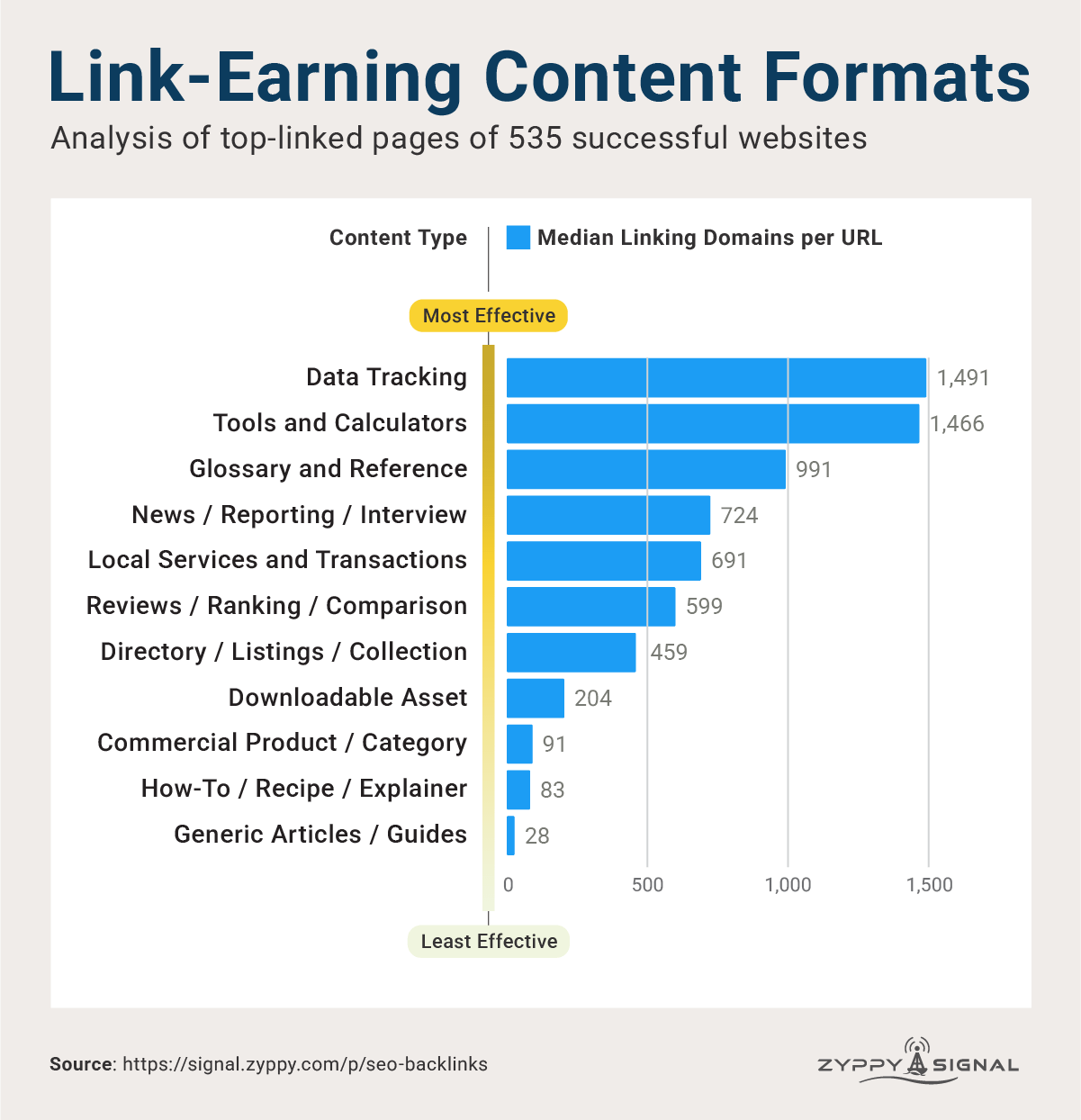
One thing became clear right away: regular blog posts and guides earned significantly fewer links than other content formats.
In fact, general articles ranked dead last in link-earning performance, yet businesses seem to spend ~98% of their time producing this type of content.
What should businesses focus on producing instead? Here’s what actually won in our dataset. (Scroll down for definitions.)
Content Format Definitions
Data Tracking: Anything involving records and updating data feeds. Think stock prices and sports lineups.
Tools and Calculators: Interactive tools, converters, and calculators.
Glossary and Reference: Definitions, technical docs, and reference resources.
News / Reporting / Interview: News and events.
Local Service and Transaction: Local service-based pages and transactions.
Review / Rankings / Comparison: Product reviews, comparisons, best-of lists, and rankings.
Directory / Library / Collection: Resources, listings, assets, or other items for browsing.
Downloadable Asset: Fonts, graphics, textures, templates, etc.
Commercial Product / Category: Product pages and shopping categories.
How-To / Recipe / Explainer: Tutorials, recipes, educational explainers.
Generic Articles / Guides: Blog posts and general guides.
Seems like a lot, right? But regardless of the exact format type, almost all the big backlink examples had a few traits in common…
The 5 Traits of Evergreen Backlink Formats
Many of these traits overlap with the same website features that won Google in our analysis earlier this year.
1. Original/Proprietary Information: Nearly all (but not quite 100%) of these content types contain something unique that can’t be easily reproduced by another site, or even AI. This could be unique data, imagery, or even a POV from a reputable source.
With few exceptions, these content formats feature “non-commodity” content that Google now rewards.
2. Job/Task Completion: Many of these content types allow users to “do” something or help complete a task. Sometimes that task is part of a larger task, like a dinner menu that links to a wine pairing. Or think of a journalist who needs a statistic to write a story. Often, a linkable asset simply saves someone a lot of work.
3. Provides Evidence: Perhaps one of the most underrated SEO AI strategies today: good content shows its evidence. Where did the numbers come from? How did the tests work? When was the data updated? Evidence not only builds trust, but gives others something to link to and cite. (Hint: This also works with LLMs)
4. Specific: Our analysis showed that highly linked pages are often highly specific. Broad studies can earn links, but in the long run, people generally look for specific facts to cite. For example, folks may link to your “Ski Report Guide,” but they are likely more interested in a specific mountain. The same goes with products, software, and webpages of all types.
5. Long Shelf Life: We found highly linkable content is typically maintained across several years. This means keeping the content up to date and maintaining it regularly to keep it evergreen.
So what content should you build to earn backlinks? It depends on your business, but based on our analysis, we’ve identified 20 content types to consider.
When executed properly, each should give you a better chance of earning backlinks than those boring blog posts you’re producing.
A note on outreach: Our analysis specifically looked for content that earned backlinks “naturally” over time. This usually means someone found it organically and chose to link to it. No cold emails required.
This doesn’t mean that these content types will automatically earn backlinks without effort. At a minimum, the content needs to rank on Google for this to work (being specific helps). Outreach and getting the first few links through manual effort can go a long way in getting the flywheel turning.
20 Link-Earning Content Types That You Should Create
1. Original Measurement & Tracking
Effort: High
Is there something in your industry that’s hard to measure, that others would find valuable?
A few years back, my colleague Dr. Pete published MozCast, one of the first Google algorithm trackers, and it easily earned 1000s of backlinks.
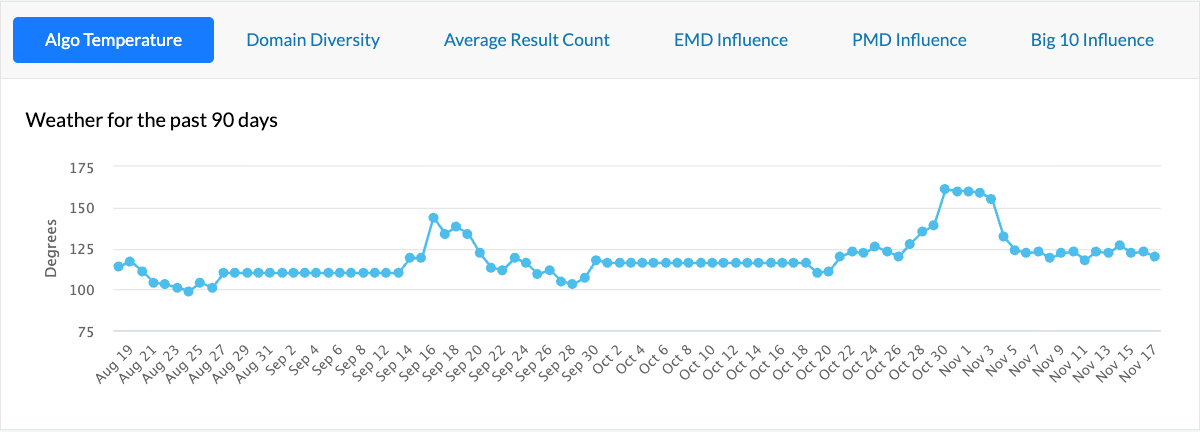
To succeed with this strategy, you need to publish metrics you can directly track. Bonus points if you include evidence of how you did it. The most successful examples track data that changes regularly.
Real-World Examples
Bicycle Rolling Resistance: Road Tires — Measures road-bike tires. 230 Linking Domains
Lygte-info: 18650 Battery Comparator — Compares rechargeable batteries. 103 Linking Domains
Ookla Speedtest Global Index — Tracks mobile and broadband speeds. 9,026 Linking Domains
2. Reference Tables
Effort: Moderate
At first glance, reference tables seem pretty boring. Most content teams would hardly consider them “content.” And if we’re aiming for non-commodity content, these seem to go in the other direction.
But when someone is looking for a specific number to cite, a cleanly organized and authoritative reference table can earn a ton of links - when it’s done well. The key is often to group many values together, keep the page updated, and make it the most authoritative source possible
Real-World Examples
Engineering ToolBox: Metal Conductivity — Lists thermal-conductivity numbers for metals. 355 Linking Domains
Wood Database: Hard Maple — A database of maple wood qualities. 253 Linking Domains
FoodSafety.gov Cooking Temperatures — Lists safe internal cooking temperatures. 7,709 Linking Domains
3. Ranked Benchmarks
Effort: High
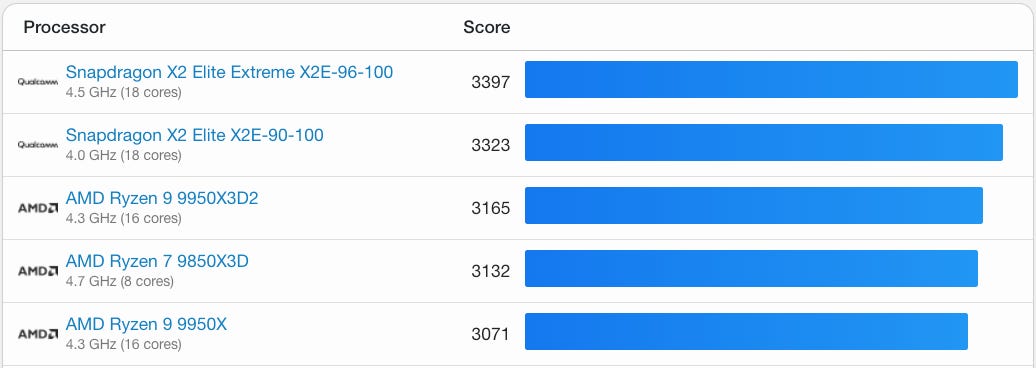
Anyone can publish a “Top 10” listicle, but data-backed benchmarks are much more difficult to reproduce. Benchmarks typically rank products/people/things on measurable attributes.
The rankings can also change regularly. If you’re an affiliate comparing multiple products, benchmarking them can offer a repeatable, evergreen strategy.
Real-World Examples
KeepTradeCut Dynasty Rankings — Ranks fantasy-football players using community ratings. 80 Linking Domains
Geekbench Processor Benchmarks — Compares processor performance using standardized tests. 400 Linking Domains
OpenPowerlifting Records — Ranks competitive powerlifters by performance stats. 62 Linking Domains
4. Location Data Pages
Effort: High
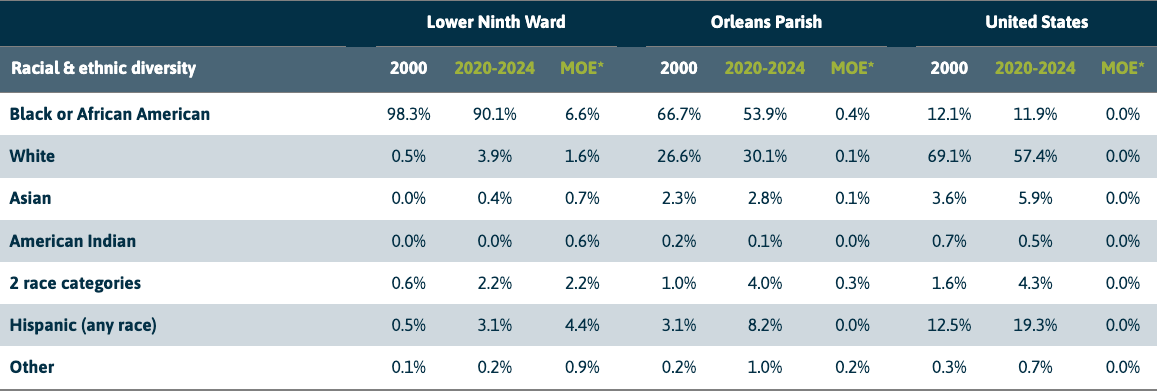
Location fact sheets present collected facts about a specific place, e.g., demographics, jobs, housing, etc. Reporters and researchers often need very specific information when writing about places.
Obviously, having access to reliable source data is key. That said, when done well, this can also be constructed programmatically.
Real-World Examples
Global Detention Project: United States — Compiles immigration statistics. 151 Linking Domains
The Data Center: Lower Ninth Ward — Tracks population and demographic changes in New Orleans. 65 Linking Domains
Data USA: New York City — City-level demographics, employment, and economic stats. 80 Linking Domains
5. Original Surveys & Experiments
Effort: High
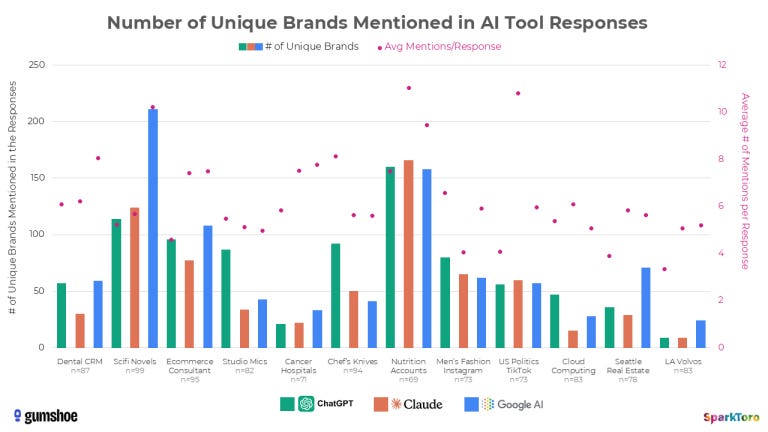
Surveys can be a fantastic way to create unique content backed by fresh content and unique perspectives. Even better, when you repeat the same survey, you can track and benchmark changes over time.
A well-designed survey can be challenging to run. I learned that the hard way when we published our Ranking Factors Expert Survey. But when they generate interest, they can earn links, like the 212 linking domains we’ve seen since publishing.
Real-World Examples
Written Word Media: 2025 Indie Author Survey — Reports from 1,346 self-selected indie authors on income and publishing. 156 Linking Domains
SparkToro AI Recommendation Study — Tests if AI prompts recommend the same brands and products. 3,093 Linking Domains
Orbit Media Blogging Survey 2026 — Annual survey of 1,000+ marketers. 3,016 Linking Domains
6. Product Tests & Comparisons
Effort: High
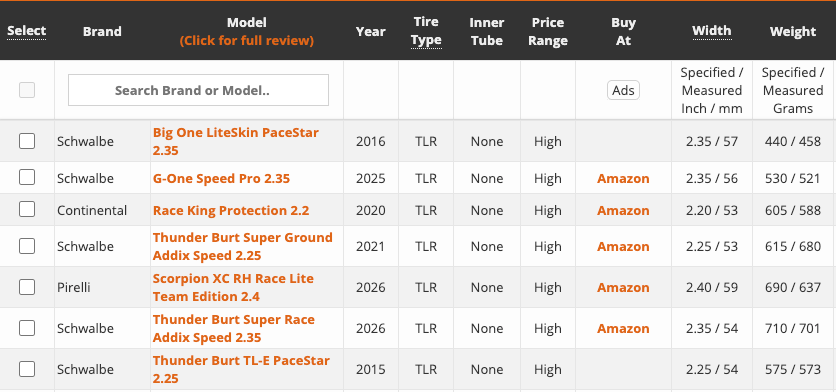
Over the past few years, Google tends to demote affiliate sites with generalized product reviews. The ones that survived, and sometimes thrived, tend to document extensive first-hand testing. These sites put products through vigorous testing and publish stats often more detailed than the manufacturer’s.
Real-World Examples
RTINGS LG C4 OLED Review — Reports hands-on test results for TV picture quality and performance. 1,525 Linking Domains.
OutdoorGearLab Backpacking Tents — Compares backpacking tents. 190 Linking Domains
Bicycle Rolling Resistance: Mountain-Bike Tires — Compares mountain-bike tires. 91 Linking Domains
7. Industry Data & Trends
Effort: High
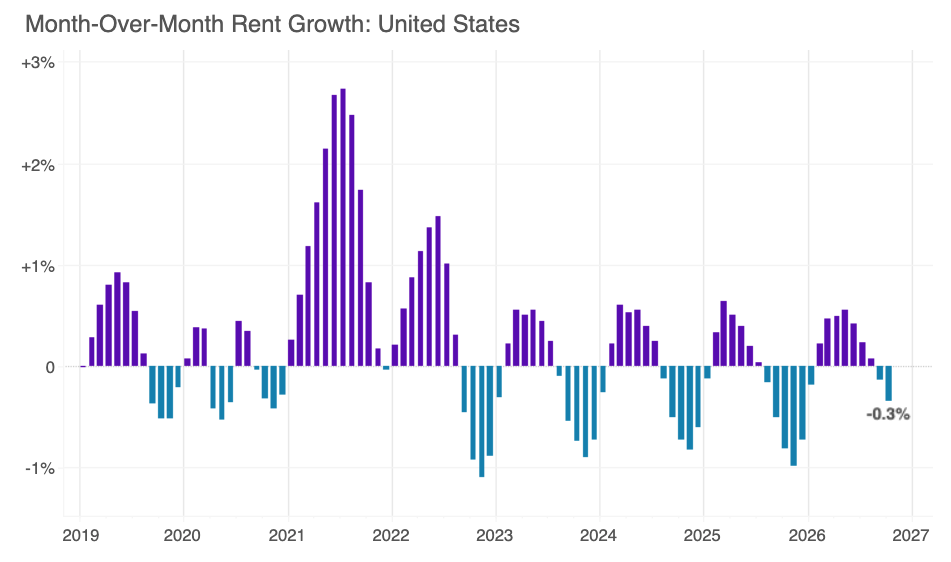
Businesses often sit on a trove of user and customer data, or data collected from the field or third-party sources. Anonymizing and analyzing that data can provide rich insights for publication. Buy-in from the rest of the company is typically (and justifiably) the biggest challenge.
Real-World Examples
ChartMogul SaaS Retention Report — Analyzes customer retention and churn. 242 Linking Domains
Jobber Home Service Trends Report — Trends in home service industries. 371 Linking Domains
Apartment List National Rent Report — Tracks rental prices and housing trends. 2,532 Linking Domains
8. Best-of Lists & Annual Rankings
Effort: High
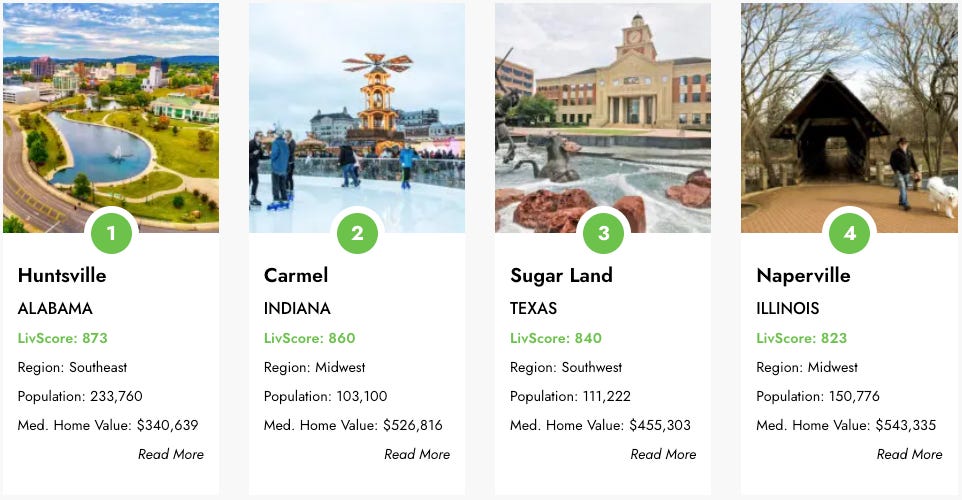
Everybody loves a “Best” and “Top” list, especially when it’s backed by solid research and data. The neat thing about a good ranking list is that everyone involved may want to link to it: the folks who made the list, journalists, and people researching the topic. A solid topic can also be covered annually.
The keys to success are covering an interesting topic and backing the list with a solid research methodology. Remember, always show your evidence.
Real-World Examples
Livability: Top 100 Best Places to Live in 2026 — Ranks US cities on quality of life. 479 Linking Domains
The Ramen Rater: Top Ten Instant Noodles 2025 — Ranks instant noodles based on reviews. 70 Linking Domains
Independent Games Festival: 2026 Winners — Ranks independent video games. 237 Linking Domains
9. Statistics Roundups
Effort: Medium
Statistics collection pages have been a staple of link building for years because writers always look for well-researched numbers to support their articles. Today, we even see evidence that AI systems like these pages as well for the same reason.
On the positive side, you don’t even need to conduct original research. That said, the challenge is collecting accurate, verifiable statistics from credible sources.
Real-World Examples
EmailTooltester: Email Marketing Statistics — Collects email marketing statistics. 107 Linking Domains
Sleep Foundation: 126 Sleep Statistics — Sleep statistics. 1,696 Linking Domains
Podcast Insights: Podcast Statistics — Summarizes podcast audience, platform, and revenue statistics with source references. 2,161 Linking Domains
10. Research Reviews
Effort: High
Scientific papers and research are often dry and difficult for consumers to digest. You can build entire businesses by reviewing existing research and making it easier to understand. A good research review explains what the science says, where it falls short, and helps people make decisions.
Bonus points if your review assigns “scores” to the evidence using a clearly defined standard.
Real-World Examples
Examine: Creatine — Scientific research on creatine supplementation. 893 Linking Domains
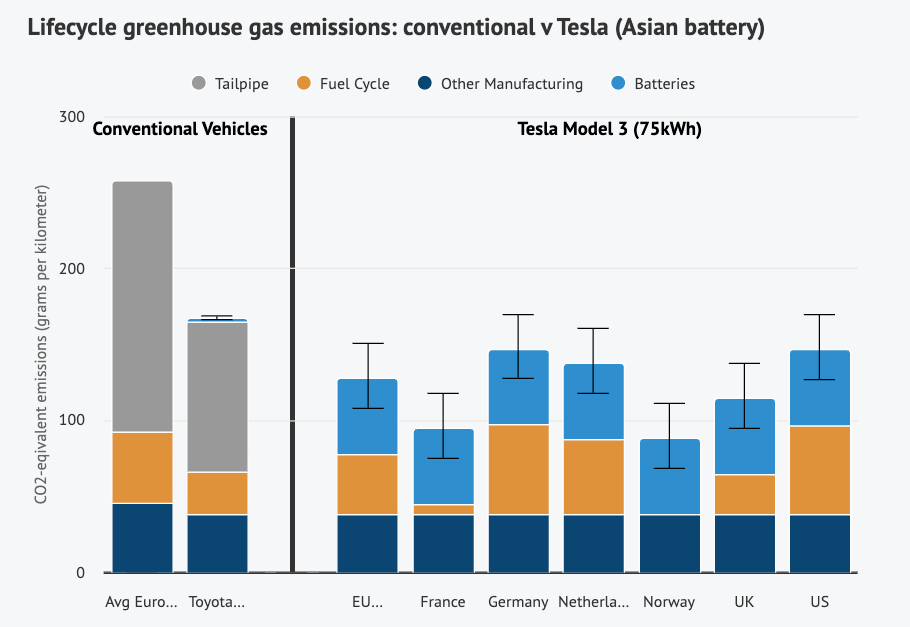
Carbon Brief: Are Electric Vehicles Better for the Climate? — Studies on electric vehicles versus gas-powered cars. 801 Linking Domains
Low-tech Magazine: Direct Solar Power Without Batteries — Research on solar-powered appliances. 94 Linking Domains
11. Expert Explainers
Effort: Medium
If you can make a complex concept easy to understand, you might have a linkable asset. Bonus points if you can do it with original illustrations, charts, or animations. The best explainers have a magical quality about them that often produces an “a-ha” moment for the reader.
People link to these because they offer a way to explain complicated subjects that’s easier than explaining them themselves.

Real-World Examples
Josh W. Comeau: Interactive Guide to Flexbox — Explains CSS Flexbox using interactive examples. 1,688 Linking Domains
Bartosz Ciechanowski: Airfoil — Explains how airplane wings generate lift. 262 Linking Domains
Stephen Wolfram: What Is ChatGPT Doing … and Why Does It Work? — Explains the science behind ChatGPT. 2,368 Linking Domains
12. How-To Guides
Effort: Medium
At first glance, you may think that “how-to” guides fall under the umbrella of “commodity content” - and for many websites, you’d be right. But when done correctly, how-to guides can transcend commodity content. This is especially true when paired with original info, first-hand experience, rich images and video, testing evidence, and advice that goes beyond the typical article.
Real-World Examples
The Perfect Loaf: Beginner’s Sourdough Bread — Teaches sourdough baking with detailed instructions and original photos. 230 Linking Domains
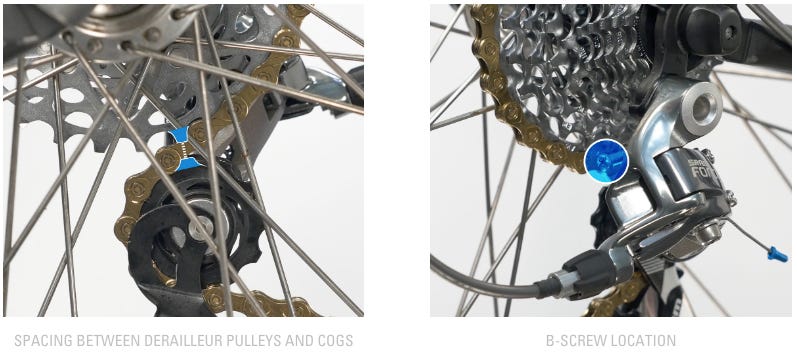
Park Tool: Rear Derailleur Adjustment — Step-by-step bike repair instructions and video. 192 Linking Domains
Homestead and Chill: How to Build a Compost Bin — DIY project with original photos and instructions. 23 Linking Domains
13. Historical Timelines
Effort: Medium
This reminds me of another project from my time at Moz, and also from Dr. Pete: The Google Algorithm Update History, which earned 1000s of backlinks.
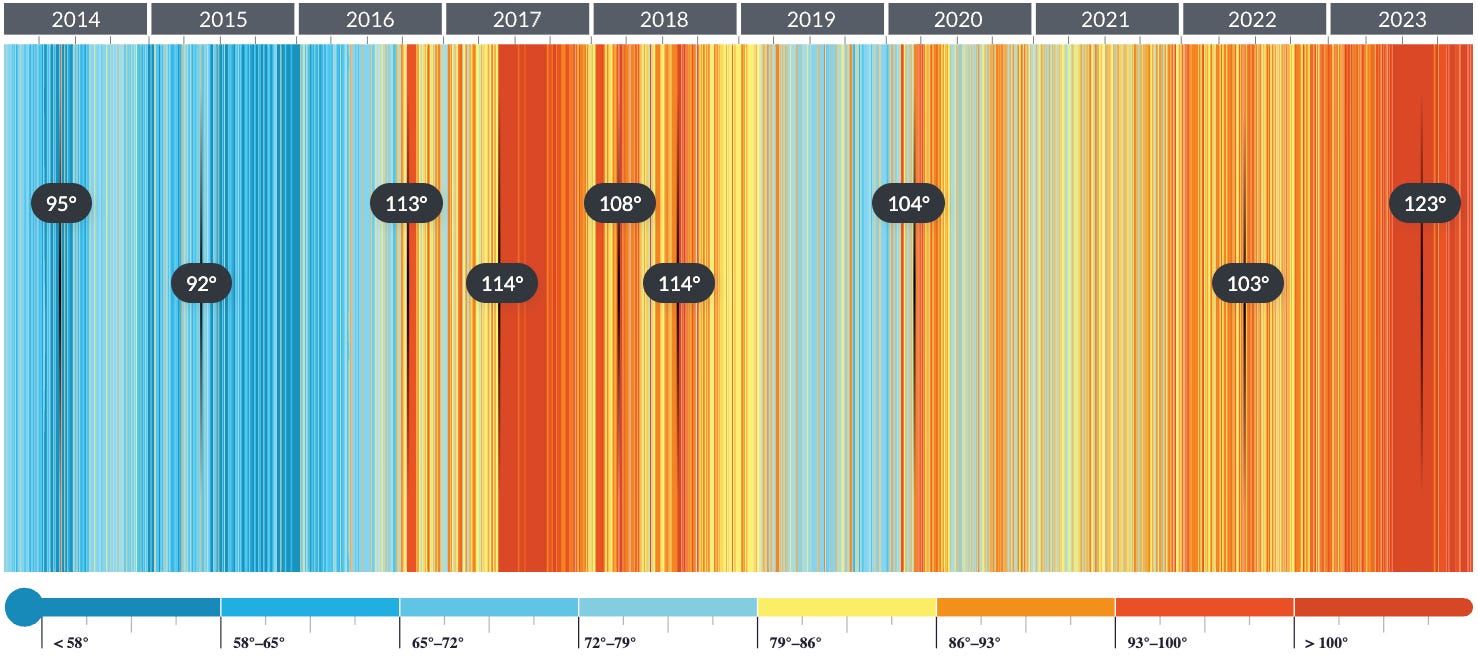
Timelines organize events in a way that’s easy to understand. They work well for both historical events and industries where things change regularly. Folks simply link to these when they need an authoritative source and don’t want to recreate an entire timeline. Bonus points if you format your timeline into an attractive graphic.
Real-World Examples
Web Design Museum: Web Design History — Major developments in web design. 1,393 Linking Domains
Food Timeline — Traces the origins of foods using historical research. 1,071 Linking Domains
Fashion History 1920-1929 — The evolution of fashion across a decade. 305 Linking Domains
14. Glossaries & Definitions
Effort: Medium
We need to tread cautiously here. Glossaries and definitions are so easy to build that they create a lucrative target for many content teams. The risk is that the final product is so generic it becomes the very definition of “commodity content.”
We don’t want to let that happen on our watch. In order to rise above, glossaries and definition pages work best when:
They come from a super-authoritative source
Are evidenced by rich examples that are difficult for AI to replicate
Supported by expert perspectives
Real-World Examples
Laws of UX: Jakob’s Law — Explains a design principle using practical examples and supporting research. 580 Linking Domains
Deceptive Patterns: Types of Deceptive Pattern — Defines manipulative interface-design practices using recognizable categories and examples. 466 Linking Domains
ISAPP: Probiotics — Explains the scientific requirements for something to qualify as a probiotic. 353 Linking Domains
15. Checklists & Printable Assets
Effort: Low to Medium
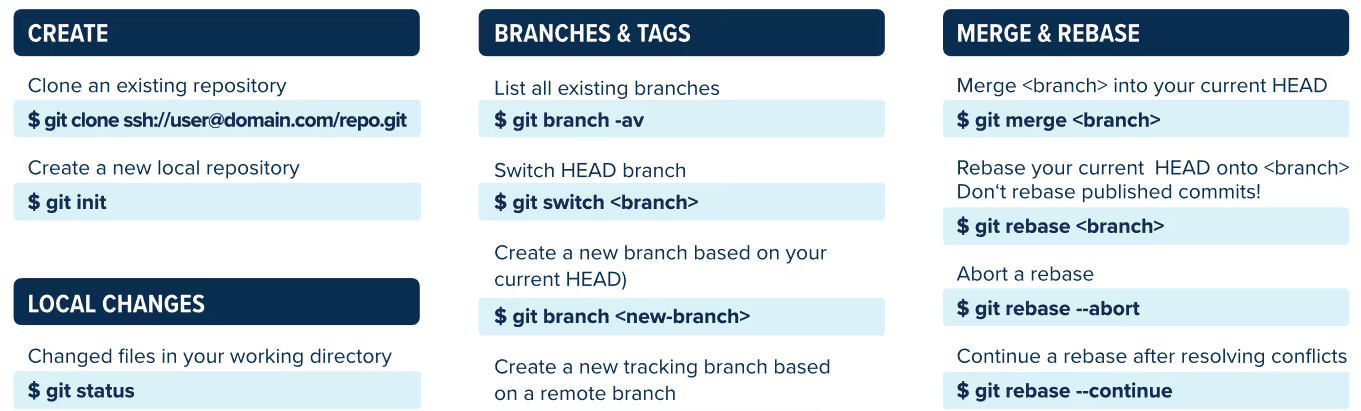
Oftentimes, it’s not the information you present, but how you present it. Even in the age of AI, downloads and checklists still have a place. These assets make sense when someone needs to reference something frequently (e.g., technical specs) or when you have a long list of things to remember, like a packing list.
Checklists and printable assets are easy to make, so the key is often in superior design and/or usability.
Real-World Examples
Tower: Git Cheat Sheet — Downloadable reference covering Git commands. 156 Linking Domains
SmarterTravel: The Ultimate Packing List — Editable travel packing checklist. 1,087 Linking Domains
Earthquake Country Alliance: Seven Steps to Earthquake Safety — Earthquake preparedness checklists. 544 Linking Domains
16. Tools & Calculators
Effort: Medium to High
Let’s be honest: with AI, the barrier to building new tools and calculators is close to zero. That said, the right tools can still gain popularity when they solve real problems. The harder the problem, the more value there is. If you can leverage proprietary data or algorithms, all the better.
For Your Money or Your Life (YMYL) niches, calculators from an authoritative source may be trusted more than AI, and reporters are more likely to link to them.
Real-World Examples
WalletBurst: Coast FIRE Calculator — Advanced retirement calculator. 178 Linking Domains
Stadler Made: Pizza Calculator — Calculates pizza dough ingredients. 54 Linking Domains
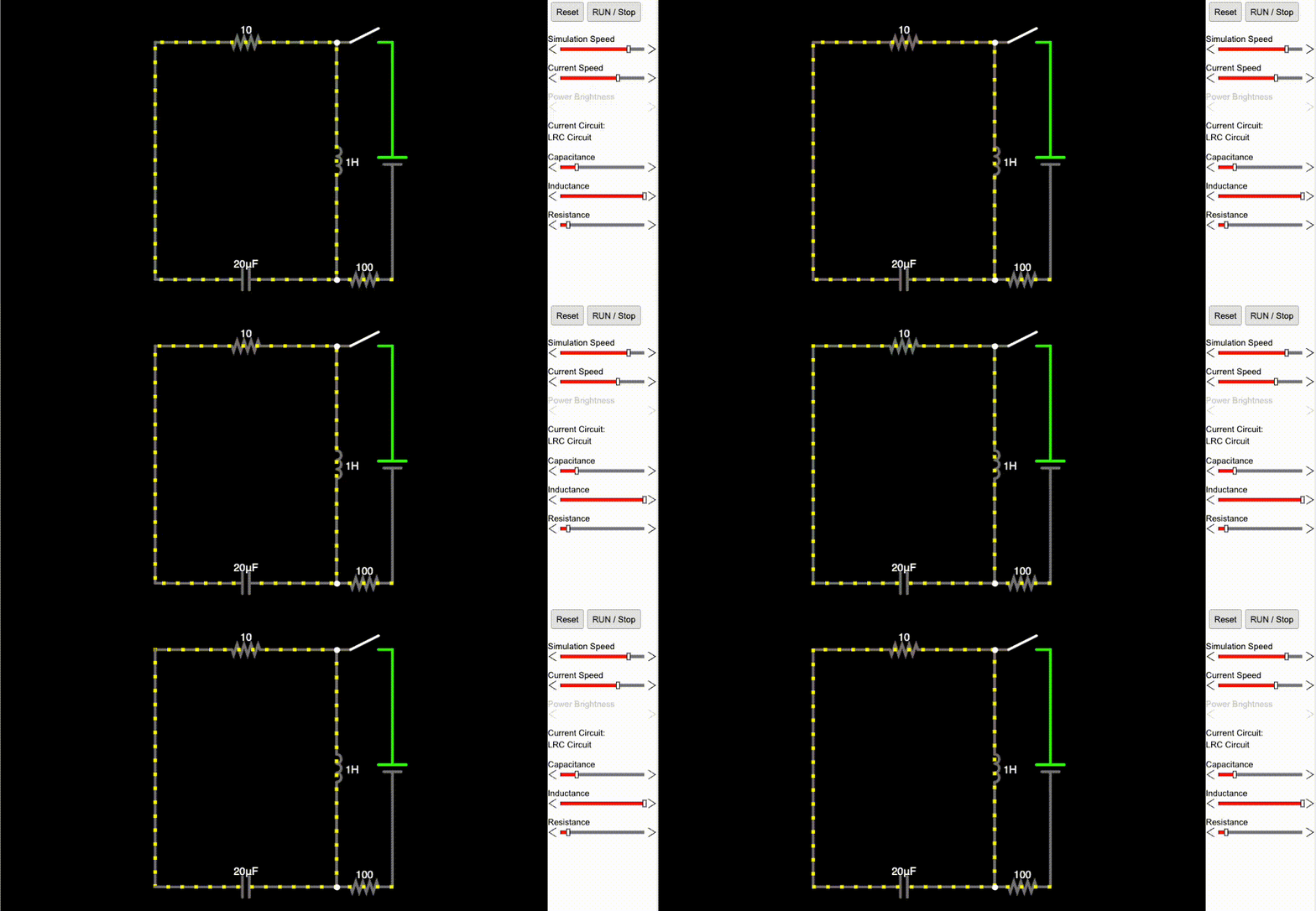
Falstad Circuit Simulator — Lets users build and test electronic circuits. 1,519 Linking Domains
17. Free Design Assets & Templates
Effort: Medium to High
“Design” is a huge category online, and covers everything from simple templates to advanced engineering schematics. Canva basically built its entire business by offering easy-to-use design templates. The best examples in this class are often hyper-specific. A thoughtful design asset can earn links for years.
Real-World Examples
Inter Typeface — Free, open-source font family. 3,290 Linking Domains
Poly Haven: Aerial Grass Rock — High-resolution 3D texture with downloadable assets. 68 Linking Domains
Untitled UI: Free Figma UI Kit — Free Figma UI Kit. 2,060 Linking Domains
18. Financial & Contract Data
Effort: High
Many publishers may shy away from publishing financial data because they don’t have access to first-party information, but that shouldn’t stop you. Financial data typically takes some digging, but is often publicly available. The trick is turning it into something that’s easy to understand and digest. People often prefer a clear report that gathers everything in one place over a murky document.
Real-World Examples
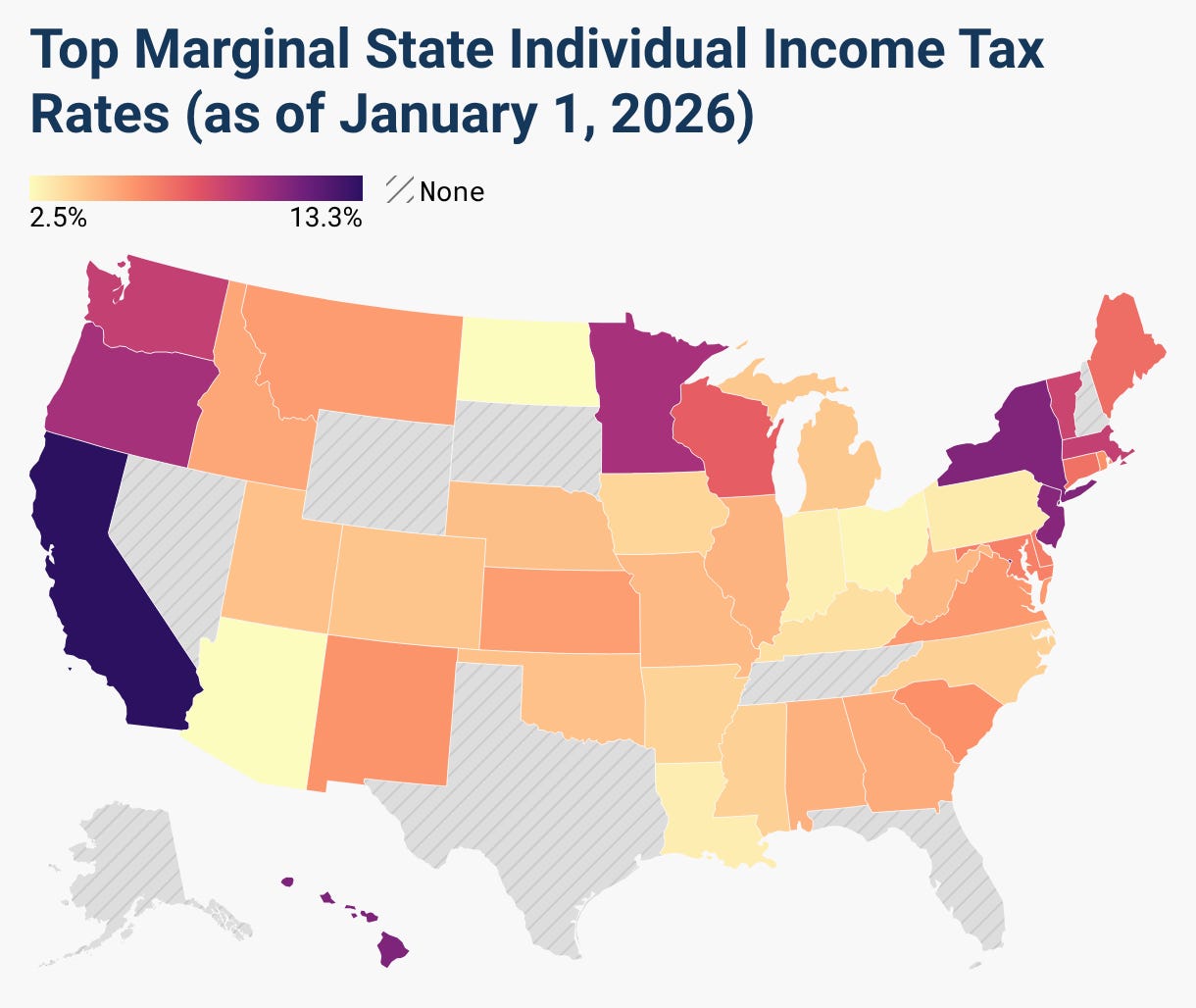
Tax Foundation: 2026 State Income Tax Rates — Tax info for all 50 US states. 1,053 Linking Domains
Over the Cap: Kansas City Chiefs — Salary info for a sports team. 142 Linking Domains
Macrotrends: Shopify Revenue — Organizes Shopify’s historical revenue into a financial time series. 83 Linking Domains
19. Software & Code Assets
Effort: High
Free software can attract links by solving problems people would otherwise have to solve themselves. Think WordPress plugins, reusable code libraries, browser extensions, and developer tools.
Unlike a typical article, software can become part of someone’s daily workflow. As more people adopt it, tutorials, documentation, and community discussions can generate links for years.
You don’t need to build an entire application. A small plugin or code library that solves one problem well can become a resource people recommend again and again. The key is keeping it useful, documented, and maintained.
Real-World Examples
Detailed: SEO Browser Extension — Free Chrome extension to inspect on-page SEO. 559 Linking Domains
10up: Simple Page Ordering — WordPress plugin that lets users reorder pages. 136 Linking Domains
NiteoThemes: CMP WordPress Plugin — Plugin for creating maintenance pages. 16 Linking Domains
20. Interactive Maps
Effort: High
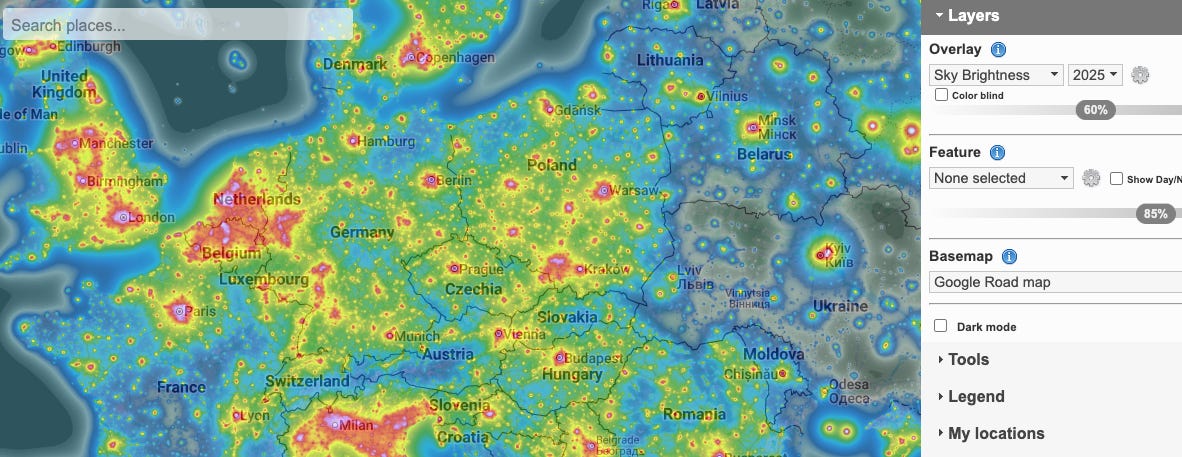
Everyone loves a good map, especially when it communicates lots of juicy data. You can make a map out of almost anything. The challenge is making the map useful in a way that goes beyond a typical blog post, and detailed enough to give people something to explore. Check out the examples below.
Real-World Examples
SmokyMountains.com: Fall Foliage Prediction Map — Predicts peak fall colors. 2,479 Linking Domains
FreeCampsites.net: Free Camping Map — Free and low-cost campsites. 3,239 Linking Domains
Light Pollution Map — Helps people find dark skies for stargazing. 6,203 Linking Domains
Hopefully at this point, you have enough inspiration to build content beyond boring blog posts. What will you build next?
👋 Subscribe free (it helps us produce research like this) and get tips + tactics on how to win more SEO and AI visibility.
Methodology
For this study, we analyzed backlink data from 535 websites across a range of industries and business models. Most had at least 10,000 estimated monthly organic visits, according to Ahrefs. Full Dataset.
We used Ahrefs to identify pages attracting links from multiple websites, then grouped them by content type and link-building tactic. We also analyzed individual backlinks to understand why other websites might link.